
Confirm file format and reference conventions
NGS / 009 · Reproducible workflows
NGS Pipeline Architect
A guided design surface for reproducible genomics workflow templates across local, HPC and controlled cloud environments.
SCIENTIFIC PURPOSE
Helps teams structure repeatable RNA-seq and variant-analysis workflows using established workflow languages and container profiles.
Who it helps
- Bioinformatics engineers
- Core facilities
- Biotech platform teams
- Research software engineers
Supported inputs
- Pipeline type
- Compute environment
- Reference and tool choices
- Resource profile
Useful outputs
- Nextflow or WDL template
- Execution profile
- Container-oriented configuration
- Workflow checklist
PROJECT INTELLIGENCE
A structured view of
scope and evidence.
These figures describe the documented public surface—not biological performance, clinical validity or benchmark superiority.
NGS / 009Working demonstration
Nextflow DSL2WDL/CromwellContainerised executionWorkflow provenanceDATA CONTRACT
What enters, what happens,
what leaves.
01 / INPUT
Pipeline type
Compute environment
Reference and tool choices
Resource profile
02 / ANALYSIS
01Choose the analytical objective
02Select execution environment
03Configure stages and references
04Review generated workflow
05Test with controlled benchmark data
03 / OUTPUT
Nextflow or WDL template
Execution profile
Container-oriented configuration
Workflow checklist
EVIDENCE & INTERPRETATION MATRIX
How to use the project responsibly.
DimensionPublic evidenceInterpretation boundary
Interface2 documented viewsScreenshots demonstrate interaction patterns, not scientific validation.
MethodsNextflow DSL2 · WDL/Cromwell · Containerised execution · Workflow provenanceMethod presence does not establish suitability for every dataset.
ReproducibilityDefined inputs, stages and outputsVersions, parameters and data provenance must accompany a real analysis.
Scientific useResearch exploration and communicationNo medical, diagnostic or treatment conclusion is produced.
BEFORE INTERPRETATION
Record tool, database and dataset versions
Inspect missing values, outliers and sample labels
Review assumptions behind each selected method
Keep exported figures linked to their source data
Request domain-expert review for consequential claims
TYPICAL RESEARCH FLOW
- 01
Choose the analytical objective
- 02
Select execution environment
- 03
Configure stages and references
- 04
Review generated workflow
- 05
Test with controlled benchmark data
INTERFACE GALLERY
Multiple views,
one research task.
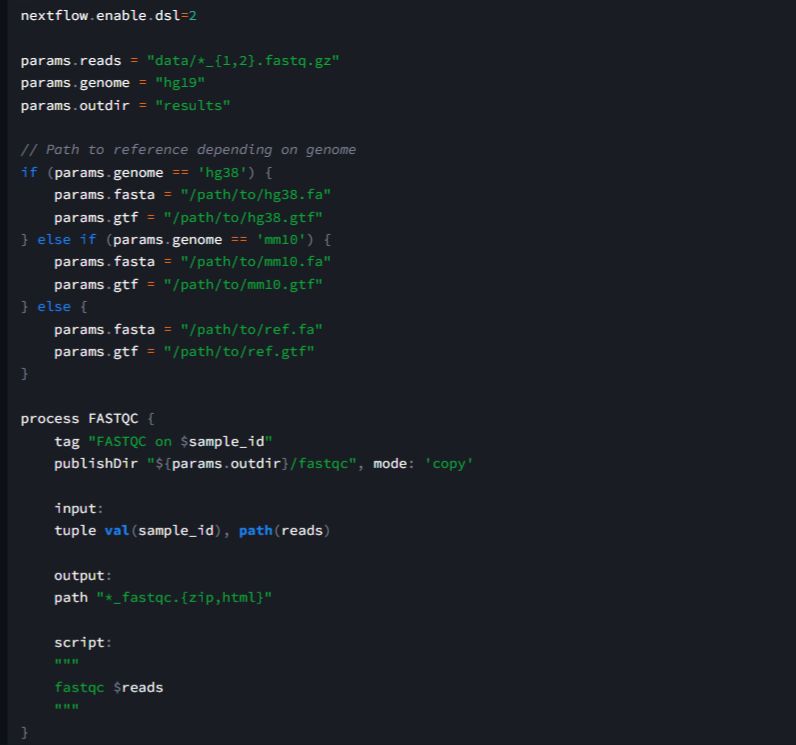
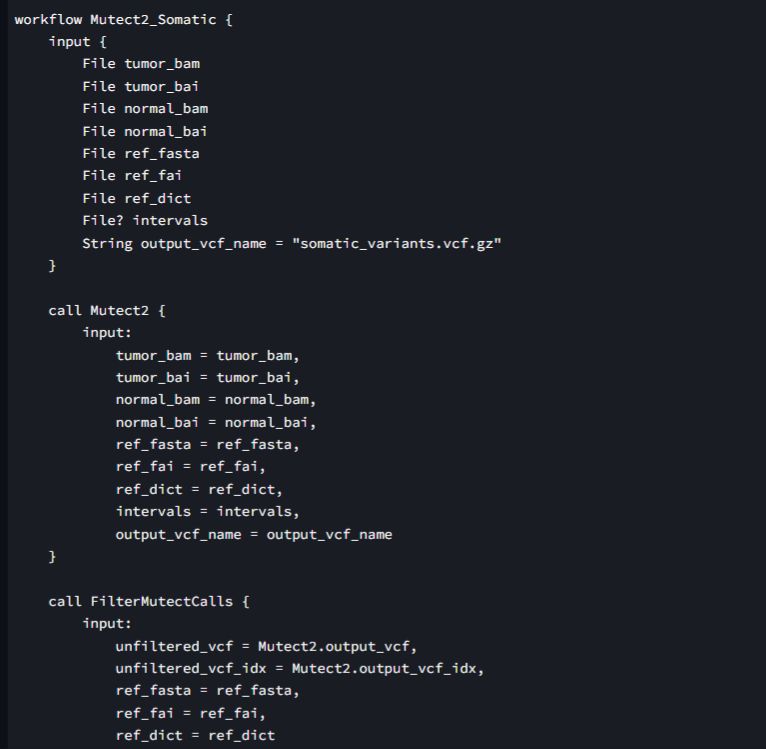
Project demonstration captures. Displayed material may be benchmark or demonstration data and is not clinical evidence.
METHODS REPRESENTED
Nextflow DSL2WDL/CromwellContainerised executionWorkflow provenance
KNOWN LIMITATIONS
- Generated workflows require review and validation
- Cloud execution may create external cost
- Production deployment needs organisation-specific security controls
USEFUL QUESTIONS
Before using the output.
Is generated workflow code ready for production?
It is a starting point that must be reviewed, tested, versioned and validated in the target environment.
Which workflow systems are represented?
The demonstrated project focuses on Nextflow DSL2 and WDL/Cromwell patterns.